
Is the Alaunt a Bandog?
Bandog, Alaunt - Same thing, Right?
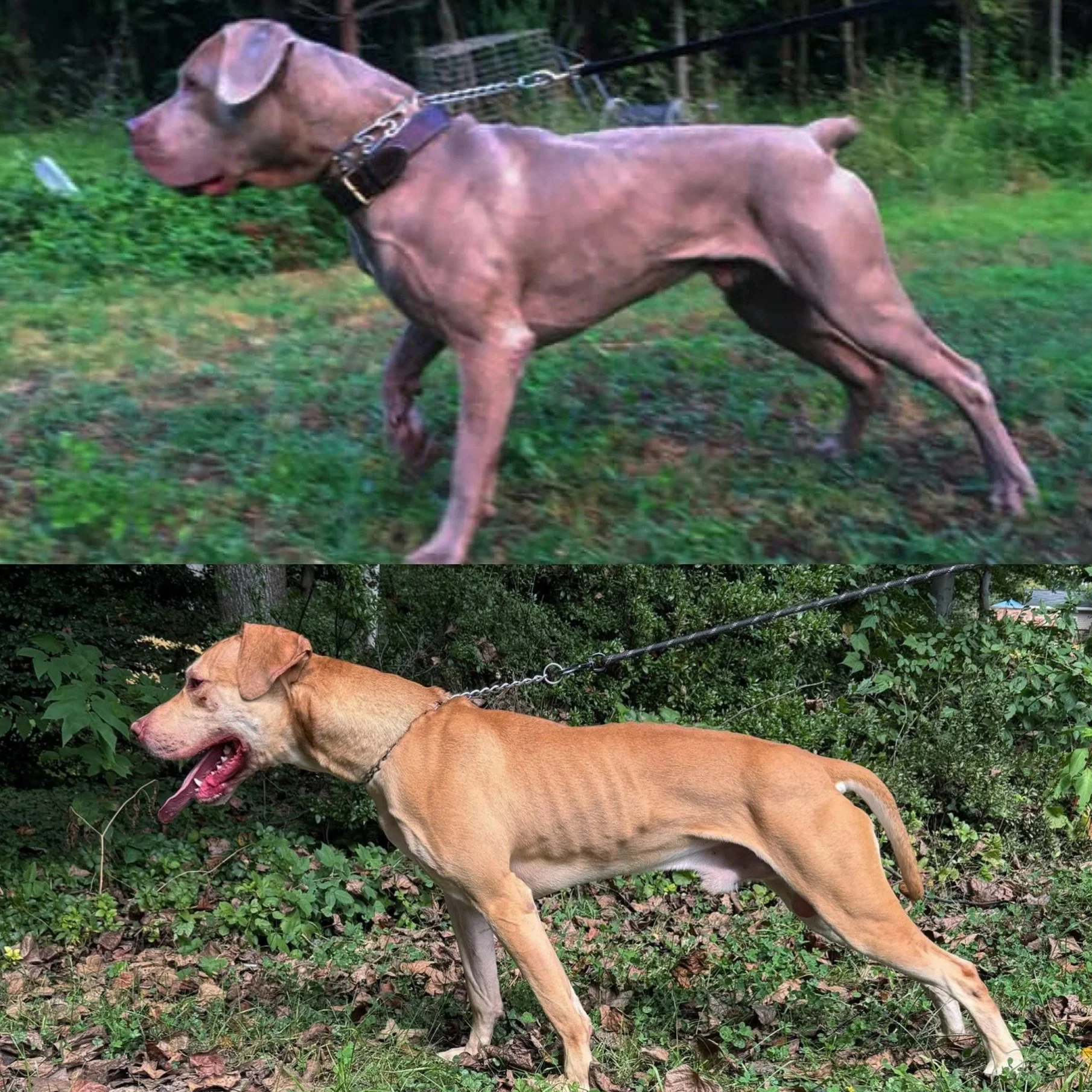
Savant’s Cairo built like a Runningback, and his great grandson, Adonis - built like a Wide Receiver
The resurgence of “utilitarian dogs” have influenced the general public’s understanding of “purpose bred crosses” - arguably for the better. Bandogs, Bull Herders, Lurchers, Alaunt Types - historically valued for their abilities, are heavily marketed as “superior versions” to their purebred counterparts. As society’s understanding of selection criteria, and performance testing increases, so does the use of blanket terms used to describe these purpose bred crosses.
So when component breeds are based on Bull and Terriers and Mastiffs - they’re bandogs right? On the surface level, sure. Mutts bred for a job. But move past surface level understanding, and we start to consider historical context. Dogs weren’t just titles. They’re purpose bred tools.
Bandog History
The Bandog is best understood as a guardian-type dog bred for close quarters combat. That legacy matters because it shaped the behavioral and physical priorities found within the type.
Historically, the term referred to dogs restrained during the day and deployed at night, when threats were most likely to occur. They’d patrol confined spaces, and work in defense of property, people or assets.
The Night Watch Dog - or Bull Mastiff as it’s called today - is one of the first “documented” purebred bandogs. Heavy in type, and serviceable against intruders. It was known to dissuade, and engage when required. This was a dog designed for confrontation. Bred to hold ground, read human intent, and commit decisively when escalation was necessary. It was designed for close range confrontation.
The Alaunt Veauntre - Historical Orgins
Speed, stamina, and sight based pursuit, the Alaunt Veauntre is defined by distance, pace and method of acquisition. Unlike guardian oriented bandog types, the Veauntre was bred to locate targets visually, maintain speed and stamina over time, and complete a catch after pursuit. They are built for movement, not static presence. Their structure prioritizes efficient gait, respiratory capacity and heat tolerance.
Their aggression profile is distinct - task driven, not just territorially defensive. Engagement is purposeful and directional - initiated after pursuit, not simply triggered by intrusion. The type as a whole was developed for high speed chases, endurance based work, and visual pursuit. They are a running catch dog, not a close quarters guardian.
Environment Specific Utility
Both the Bandog and the Alaunt Veauntre are romanticized as “ancient” or lost dogs. Personally we believe that framing to be irrelevant. What matters is whether a modern expression of a respective type is accurate. Do the dogs:
Perform intended roles consistently
Maintain structural and behavioral integrity
Being bred with environment-specific utility at the forefront
A bandog without close quarters combat up front is incomplete. An Alaunt Veauntre without speed and stamina is mislabeled. Dogs are not bred to satisfy terminology - they’re bred to solve problems. Guardian work, and running catch dog work - are fundamentally different tasks. Demanding different bodies, minds, and thresholds for engagement.
Understanding the difference isn’t academic - it’s operational. And in working dogs, utility is the only lineage which matters.